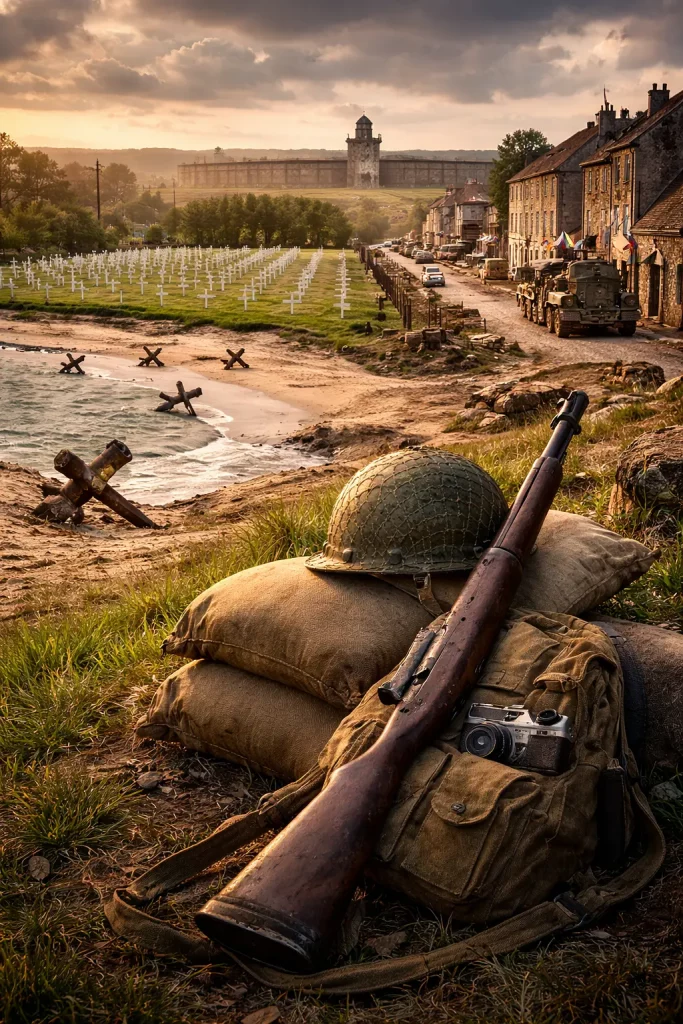
I Took World War II Tours Across Europe. Here’s What Actually Felt Real.

I grew up hearing my grandpa’s war stories. He saved a tiny French coin in his wallet for 60 years. So, last year, I booked a few World War II tours in Europe. Not just one. I wanted to see the beaches, the bridges, the camps, the quiet towns. I wanted to stand where history felt close.

If you’d like to read an even deeper dive into the moments that struck me most along the way, you can find the full narrative here.

I’ll tell you what I booked, what worked, and what didn’t. I’ll also tell you where I cried a little. And where I ate a very good apple pie, because travel is still life, you know?

How I Chose My Tours

I picked small groups when I could. I like to ask questions. I like to see maps, not just windows. Here’s the mix I did:

  • Normandy D-Day tour with OverlordTour (Bayeux, France)
  • Third Reich walking tour with Insider Tour Berlin (Germany)
  • Auschwitz-Birkenau day trip from Kraków (Poland) with a local operator
  • Bastogne War Museum and Bois Jacques foxholes (Belgium)
  • Arnhem and the John Frost Bridge with a local guide (Netherlands)
  • Eagle’s Nest and Documentation Center in Berchtesgaden (Germany)

Prices ranged a lot. My Berlin walk was about 20 euros. Normandy was about 120 euros for a full day van tour. Auschwitz from Kraków was around 80 euros with transport and a guide.

Tiny note on timing

If you’re going in early June, Normandy is packed around the D-Day date. It’s still worth it. But wear patience and layers.


Normandy Hit Me Hard (OverlordTour)

We met our guide near Bayeux at 8 a.m. It was cool and windy. He had a folder of old photos and a sand map he drew with his finger. My group had seven people. A retired nurse, a father and son, a quiet couple, and me. I brought a ham-and-butter sandwich from a bakery. I ate it fast in the van.

Stops we made:

  • Pointe du Hoc: those cliffs look like broken teeth. Wind stung my face. We had only 30 minutes because buses kept coming.
  • Omaha Beach: I took off my shoes. The sand was cold and clean. A man beside me pressed his palms to the ground and said nothing.
  • Colleville American Cemetery: the grass looked like someone combed it. We stood for the flag lowering. I cried a little, and I’m okay telling you that.
  • Sainte-Mère-Église: the church with the parachute on the roof. It looks odd and brave at the same time.

What I loved:

  • Small group. Lots of time for questions.
  • The guide used aerial photos. He showed us hedgerows and how they slowed tanks.
  • We got tiny stories. A baker who hid men. A child who watched from a hedge.

What I didn’t love:

  • Pointe du Hoc felt rushed. It was busy.
  • Weather swings are real. My ears were warm, my feet were wet. Bring socks.

Would I book again? Yes. OverlordTour felt careful and proud, not salesy.


Berlin On Foot Feels Honest (Insider Tour Berlin)

This was a three to four-hour walking tour. It started near the Brandenburg Gate. We stopped at the Memorial to the Murdered Jews of Europe. We walked to the Topography of Terror and the site of Hitler’s bunker (it’s a parking lot now). The guide drew a line with his arm and said, “This was the border. Here. Right here.” That stuck.

We took a coffee break at a small café near Potsdamer Platz. I had a flat white and a pretzel, which sounds silly on a war tour, but my feet were grateful.

Good:

  • Clear route. Short walks between big stops.
  • The guide explained names and dates in plain words. He also said, “If you forget a date, remember a face,” and I kind of loved that.

Less good:

  • The group was about 20 people. It was fine, but I do prefer smaller.
  • If you want deep, deep detail, book a private guide. This tour is a strong base layer.

Auschwitz-Birkenau: Quiet Hours From Kraków

This one is hard. It should be. We left Kraków early. The bus was clean and quiet. At Auschwitz I, we used headsets. Our guide never raised her voice. She didn’t need to.

I walked slow. I kept my hands still. Birkenau is wide and open. You can hear wind move across the tracks. I didn’t take many photos. It felt wrong for me, personally.

What to know:

  • It can feel rushed. There’s a lot to see, but the path is set.
  • Bring water. Wear soft shoes. Leave snacks for after.
  • Be gentle with your day. I didn’t plan anything fun right after. I just walked by the Vistula River and looked at the water.

I’m glad I went. I’m also glad I left space for the feelings after.


Bastogne: Foxholes, Stories, And A Star-Shaped Memory

I took a morning bus to Bastogne. The Bastogne War Museum uses an audio guide that follows a few people’s lives. You sit in rooms where scenes play out with sound and light. It’s not cheesy; it’s careful.

Then I hired a local driver for two hours. We went to Bois Jacques, where the “Easy Company” foxholes are. You can see them. You can stand at the edge and look into the trees. It was quiet. Just birds and the sound of your own breath.

We also stopped at the Mardasson Memorial. It’s a big star. Walk up. Look out over fields. It’s simple and strong.

Good:

  • The museum flows well. The stories feel human.
  • The foxholes are the part I still think about.

Less good:

  • Without a car, reaching spots around town can be clumsy. A driver helps.

Also, the hot chocolate in town? Thick and perfect. Little joy, big day.


Arnhem: Bridges, Bikes, And A Very Good Apple Pie

Arnhem surprised me. I booked a small, family-run tour. My guide had a binder of maps, plastic protectors and all. We stood by the John Frost Bridge. We talked about “a bridge too far,” about plans that looked neat on paper and fell apart in rain and fog.

We went to the Airborne Museum at Hartenstein in Oosterbeek. It has a basement with a battle scene you walk through. It’s a bit loud, but it explains a lot.

At a café, I had apple pie with a mountain of whipped cream. War talk and pie. It felt odd, but it felt real. Life keeps moving, even in the heavy places.


Eagle’s Nest And The Mountain Air

From Munich, I booked a day trip to Berchtesgaden. The bus climbs, then you go through a long tunnel and take the brass elevator up. The view at the Eagle’s Nest is wild—blue and green in every direction. The Documentation Center down the hill is the real classroom, though. It tells the story of the regime, the town, and the people who lived under it.

Heads-up:

  • Weather can cancel the lift. Clouds roll in fast.
  • Very busy in summer. Early starts help.

I liked the split: big view up top, heavy history below. Both matter.


Little Things I Wish I Knew

  • Wear layers. Europe changes moods fast.
  • Small groups help you learn more. Vans beat big buses for me.
  • Eat local and simple. A galette in Bayeux, bratwurst in Berlin, pierogi in Kraków. Food helps you breathe between stops.
  • Bring a pen. I marked names and places in my guidebook as I went.
  • If you go near June 6 in Normandy, book months ahead.
  • Respect the spaces. Speak soft. Listen more than you talk.

If you need a wallet-friendly place to sleep between these history-heavy days, the European Guesthouse puts you close to train lines without draining the tour fund.


So, Who Should Book These?

Teachers. History buffs. Kids who read a lot and ask big questions. Families who want more than dates. If you can walk a few miles and handle heavy stories, you’ll be okay. If you need timeouts, take them. I did. I just sat on a bench sometimes and looked at trees.


My Quick Picks If You’ve Got Limited Time

  • One day: Normandy with OverlordTour.
  • Two days: Add Berlin’s walking tour.
  • Three to four days: Add Auschwitz from Kraków or Bastogne with a foxhole visit. Pick the one your heart pulls toward.

I went for my grandpa. I stayed for me. These tours didn’t fix anything. They didn’t try. They showed me people—brave, scared, flawed, kind. That was enough.

If you go, bring a warm hat, a good guide, and an open mind. The rest, somehow, shows up when you need it.

—Kayla Sox

Published
Categorized as Sites

I Chased Castles Across Europe: Here’s What Actually Stuck With Me

I grew up sketching towers on my school folders. So last year, I booked the tickets and went. I spent spring and summer hopping across Europe, one castle at a time. I learned a lot—like how stone stairs can beat a gym day, and how fog can make a palace feel like a dream you almost remember.

Were they worth it? Yes. Mostly. Let me explain.

If you're mapping out your own turret-to-turret trail, check the guides on European Guesthouse for routes and cozy bases that don’t blow the budget. Their write-up on the best road trip routes in Europe was gold when I needed to string rural fortresses together.

Neuschwanstein, Germany — Pretty, crowded, and uphill

I went in May, when the trees were bright green. I took the train to Füssen, then the bus to Hohenschwangau. The walk up is no joke. It’s steep. I sweated through my light jacket and then got cold at the top. So, layers matter. If you want the history, photos, and ticket details ahead of time, peek at the castle’s official site before you go.

Inside, no photos. The tour is short, but the rooms look like a storybook. My favorite spot wasn’t inside, though. It was the bridge, Marienbrücke. The view there? Wild. Clouds hugged the cliffs. People waited for selfies, and I waited too. Worth it.

Tip I learned the hard way: book a timed ticket. And if the shuttle is full, just start walking. It’s faster than standing in line forever.

Edinburgh Castle, Scotland — Cannons, views, and the 1 o’clock boom

I visited on a windy day in June. The esplanade had bagpipes in the distance, which sounds cheesy, but it gave me goosebumps. At 1 p.m., the gun fired. I jumped even though I knew it was coming. Details on opening hours and that signature cannon blast live on the Edinburgh Castle official page if you’re the planning type.

The Crown Jewels sparkle like they’ve got stories. Mons Meg, the big cannon, looks chunky and tough. The view over the city, with Arthur’s Seat in the back, hit me in the chest. Later, I grabbed a warm steak pie down on the Grassmarket. I ate it with cold fingers and a big grin.

Château de Chenonceau, France — Gentle and green and very human

I biked from Amboise on the Loire à Vélo path and rolled in dusty and happy. This place sits over the River Cher like it’s floating. The gardens smell like herbs and roses, and the florist room made me want to run home and arrange peonies, badly.

I brought a picnic and ate by the water. A duck stared me down. I gave it one grape and felt judged, but also seen.

Pena Palace, Portugal — A fairytale… that fog can swallow

Sintra gave me a moody day. Bus 434 up, tight turns, slow going. The palace colors pop—red, yellow, blue—and then vanish in mist. It felt like walking through cotton. Kind of magic, kind of chilly.

The terrace wind pushed my hair straight back. I held my pastel de nata like it was a tiny heater. I did the park paths too, which were quiet, mossy, and way less busy than the palace line.

Bran Castle, Romania — The “Dracula” one that isn’t, but still fun

I went in September and tried the chimney cake outside first. Warm sugar on my hands. The castle has narrow stairs and small rooms. It’s more home than fortress, and the wood creaks like it’s whispering. The Dracula stuff is touristy, sure. But the hilltop view is strong, and I liked poking around the courtyard. I even bought a silly bat magnet. No shame.

Alcázar of Segovia, Spain — A ship of stone and a thigh workout

From Madrid, I took a morning train. The alcázar looks like a ship nose cutting the sky. I climbed the Tower of Juan II—152 tight steps. My legs burned. The view over the red roofs and the aqueduct was crisp and clean, like the air had been washed.

I ate cochinillo after (roast suckling pig). Crispy skin that shattered a bit. Not fancy. Just perfect.

Eilean Donan, Scotland — Mist, midges, and a bowl of soup

I drove there on a gray July day. The castle sits where three lochs meet, and the stone bridge makes the photo we all know. I took that photo. Twice.

When the wind paused, the midges came. Tiny, bossy, and rude. I ducked into the café and got cullen skink. Hot, smoky, potato-rich soup. I felt my shoulders drop. The tide was low then, so seaweed framed the base of the walls. It smelled clean and wild.

Český Krumlov Castle, Czechia — Fairytale lanes and a bear in the moat

I walked over cobbles in shoes that were too soft. Rookie move. The castle has a baroque theater you can tour in small groups. It’s fragile and a bit strict, but fascinating. Also, yes—there was a bear in the moat. It stared like I owed it rent.

The Cloak Bridge viewpoint gave me a sweeping look at red roofs and the looping river. I bought a trdelník and got sugar on my sleeves. Again.

Conwy Castle, Wales — Weathered stone, big sky

I hit it on a day with sideways rain. The towers are open to the wind, and you can walk the town walls. I did, even with damp socks. The slate tones, the sea air, the gulls yelling—it all felt raw and honest. Less polish. More heart.

Windsor Castle, England — Polished and powerful

I went on a weekday morning and still queued for security. St George’s Chapel made me whisper without thinking. The State Rooms shine, but not cold. I liked the details in the wood and the quiet in the chapel the most. If you can time it, catch the Guard change. Yes, it’s crowded. Still worth watching once.


What I loved

  • Views that make you stop talking mid-sentence
  • Little clues of real life: kitchens, chapels, worn steps
  • How each place felt different—soft at Chenonceau, bold at Edinburgh, playful at Pena
  • Local food right after: pie, soup, pastries—it helps you remember

What bugged me

  • Crowds, especially midday
  • Timed tickets that sell out fast
  • So many stairs (bring knees that don’t complain)
  • Random closures or scaffolding that photobombs your big shot

Sometimes, though, I met fellow travelers who said the bustle and occasional curious stares actually added a thrill to the experience—like enjoying the idea of being on display. If that tug of exhibitionism intrigues you, the deep-dive on candaulisme unpacks the history and modern etiquette of consensual “being seen,” so you can explore the concept safely and with clear boundaries. And if your itinerary eventually takes you across the Atlantic to the American Midwest, you might appreciate the option to connect with a welcoming, trans-friendly companion through TS Escort Bismarck, a listing site that lets you browse verified profiles and arrange a discreet, respectful meet-up—perfect for turning a quiet layover into a memorable, confidence-boosting night out.

Quick tips I wish someone told me

  • Go early or late. Lunch hour is the worst.
  • Check the castle’s site the night before. Hours change.
  • Wear real shoes with grip. Cobblestones don’t care about your ankles.
  • Carry layers. Stone halls hold cold, even in summer.
  • Pack a tiny snack and water. A calm brain drinks first.
  • Audio guides help, but sometimes a short live tour hits better.

Costs, in plain terms

I paid a wide range. Some places felt fair for what you get (Conwy, Chenonceau). Some were pricey but still special (Neuschwanstein, Windsor). Student and family tickets help. City cards can cover a few spots in big towns. I kept a simple rule: if the view stuck in my head all day, the ticket was fine.

Families and access

Kids love cannons, drawbridges, and secret-feeling stairs. Strollers? Tough. Many routes are tight or uneven. A carrier works better. Most big sites have some ramps and helpful staff, but older towers are stair-only.

My small, honest regrets

I should’ve worn wool socks in Scotland. I should’ve booked Neuschwanstein a week earlier. I should’ve left more time for the gardens at Chenonceau. And I should’ve packed one less outfit and one more snack.

So… are castles in Europe worth your time?

Yes. Not every single one. But enough of them. Pick a few that match your mood. Want drama? Edinburgh or Segovia. Want romance? Chenonceau or Pena. Want a moody postcard

Published
Categorized as Sites

I Spent 3 Weeks City-Hopping in Poland: My Honest Take

I walked these streets. I ate the food. I rode the trams. You know what? Poland surprised me in the best way. It’s not flashy. It’s steady, warm, and a little quirky. I went in late spring with a small backpack and a big appetite. Trains were my thing. PKP Intercity got me between cities on time. Jakdojade helped with buses and trams. I paid by card almost everywhere. Easy.
When I wanted a break from hostels, I booked a room through European Guesthouse and found their cozy spaces a reliable haven no matter which Polish city I’d landed in.

For anyone wanting the granular day-by-day of that journey, I broke it all down in this extended diary of how I spent 3 weeks city-hopping in Poland.

Here’s the thing. Each city felt like a different room in the same house. Same core. Different mood.

Warsaw: Big City Brain, Soft Heart

At first, Warsaw felt cold. Glass towers, fast steps, no smiles. Then it opened up. I had pierogi at Bar Mleczny Prasowy. Cheap. Tasty. A grandma waved at me for no reason. I smiled back. That was it. I relaxed.

I walked the Vistula boulevards at sunset. Teens on scooters. Music from a speaker. A couple eating ice cream on the steps. On Sunday, I sat in Łazienki Park and heard live Chopin by the pond. Free. Birds, wind, piano—yeah, I got goosebumps.

  • What I loved: POLIN Museum (plan 3 hours), the Old Town after dark, smooth metro.
  • What bugged me: Traffic noise near the Palace of Culture, and the wind between tall buildings. Bring a jacket.

Kraków: The Postcard That Talks Back

Kraków is pretty. Almost too pretty. The Main Square felt like a stage. A trumpeter plays from St. Mary’s tower every hour. It stops mid-tune. On purpose. It hits your chest.

I grabbed a hot zapiekanka at Plac Nowy in Kazimierz—crunchy bread, cheese, mushrooms. I chewed while watching kids chalk the street. Then I walked to Wawel Castle and watched the river roll by. Slow and steady.

The Schindler Factory Museum made me quiet. I walked out and didn’t speak for a bit. Some places do that. It also nudged me to seek out deeper context on the conflict, and the most gripping perspective I found was on these World War II tours across Europe that actually felt real.

  • What I loved: Night walks in Kazimierz, obwarzanek rings for breakfast, calm Vistula paths.
  • What bugged me: Big crowds at noon in the Square. Go early or late.

Gdańsk (Plus Sopot and Gdynia): Salt Air and Long Stories

Gdańsk feels like a sailor’s tale. The Old Town shines—Neptune Fountain, the big crane by the Motława River, amber stalls that glow like honey. I spent half a day at the European Solidarity Centre. Headphones on. Heart open. It sticks with you.

I took a quick train to Sopot. Long pier, gulls, fries with ketchup and mayo. In Gdynia, I walked the cliff at Orłowo. Wind in my hair. Sand in my shoes. Worth it.

  • What I loved: Evening light on Długi Targ, lazy sea walks, fresh fish.
  • What bugged me: Summer prices jump. Book early if you can.

Wrocław: The City of Little Dwarfs

Wrocław felt playful. I hunted for tiny bronze dwarfs with a coffee in hand. Each one has a job—baker, guard, singer. It turns a walk into a game. I crossed the bridges to Ostrów Tumski at dusk. A man lit gas lamps by hand. It felt old and kind.

Hydropolis, the water museum, surprised me. Fun, clean, well set. I like places that teach without scolding.

  • What I loved: Market Square energy, the Oder river at golden hour, arty corners.
  • What bugged me: My tram was packed at rush. Stand firm, grab a pole.

Poznań: Goats, Art, and a Sweet Bite

I stood in the square at noon and waited. Two little goats popped out of the Town Hall clock and butted heads. People clapped. We all laughed. It’s silly. It’s great.

I browsed Stary Browar, which is part mall, part art space. Then I had a St. Martin croissant. It’s big, rich, and full of white poppy seed. I shared it, and still needed water.

  • What I loved: Easy tram lines, Lake Malta for a walk, friendly vibe.
  • What bugged me: The croissant is a meal. Don’t plan lunch right after.

Łódź: Rough Edge, Bright Art

Łódź felt like a warehouse turned studio. I strolled down Piotrkowska Street and stared at huge murals. OFF Piotrkowska had food stalls and tech kids with headphones. Manufaktura—a giant brick complex—was busy but fun.

Trams rattled, but I liked the shake. Old bones, new spirit. That mix works for me.

  • What I loved: Street art hunts, cheap eats, creative buzz.
  • What bugged me: Some blocks felt worn and dark at night. I kept to lit streets.

Lublin: Honey Light and One Heavy Stop

Lublin’s Old Town glows. Warm walls, small arches, slow steps. I munched a cebularz—flat bread with onion and poppy seed. Simple and perfect.

I went to Majdanek. I walked the grounds. I felt small. I left with a quiet mind and a tight chest. Some trips carry weight. That’s part of travel, too.

  • What I loved: Gentle cafés, kind pace, local bread.
  • What bugged me: Fewer late buses. I planned my evenings around that.

Katowice: Music, Steel, and a Spaceship

Katowice surprised me the most. The Spodek arena looks like a UFO that landed for a concert. The NOSPR hall gave me clear, warm sound—like a hug for the ears. The Silesian Museum sits in old mine frames. Glass, coal, sky. Sharp lines. Big mood.

Nikiszowiec, with red brick blocks, felt like a movie set. I drank tea on a bench and watched neighbors chat in short bursts. It felt real.

  • What I loved: Live music scene, bold design, quick trains.
  • What bugged me: It’s not “cute.” If you want cute, go to Kraków.

Curious how modern nightlife and live-stream culture sometimes show Poland’s cheekier side? You can dive into an archive of adults-only broadcasts over at this collection of Periscope nudes to see candid, user-generated streams that reveal a very unfiltered slice of after-dark life many travelers never stumble upon.

Stateside travelers who want a similarly uninhibited, face-to-face experience—especially within the LGBTQ+ scene—can browse the vetted listings at TS escort Claremont, where transparent profiles and verified reviews help you arrange a safe, respectful meet-up without any guesswork.

Getting Around: Little Things That Helped

  • Trains: PKP Intercity was on time for me. I booked in the app.
  • City transit: Jakdojade for routes; I bought 24-hour tickets in Warsaw and Wrocław. Cheap and easy.
  • Cash vs card: Card almost everywhere. I kept small coins for toilets.
  • Water: Tap water was fine where I stayed. Cafés refilled my bottle if I smiled and asked.
  • Language: Hello and thank you in Polish go a long way. I tried. People helped.

Prefer four wheels to rails? These are the best road trip routes in Europe I've actually driven and they pair nicely with a swing through Poland.

Food Notes I Keep Replaying

Pierogi with cabbage and mushrooms. Żurek soup in a bread bowl when a rain cloud hit. Hot oscypek cheese with cranberry at a stand in a square. Compote that tasted like summer in a glass. Nothing fancy. Just good.

So…Which City Is “For You”?

  • First-timer who wants storybook views: Kraków
  • History buff with a big appetite for museums: Warsaw and Gdańsk
  • Sea breeze and casual strolls: Sopot and Gdynia (base in Gdańsk)
  • Street art and a fresh scene: Łódź
  • Family fun and whimsical walks: Wrocław
  • Sweet tooth and cute squares: Poznań
  • Slow days and soft tone: Lublin
  • Design, music, and edge: Katowice

My Final Word

Poland felt

Published
Categorized as Sites