I Took World War II Tours Across Europe. Here’s What Actually Felt Real.

I grew up hearing my grandpa’s war stories. He saved a tiny French coin in his wallet for 60 years. So, last year, I booked a few World War II tours in Europe. Not just one. I wanted to see the beaches, the bridges, the camps, the quiet towns. I wanted to stand where history felt close.

If you’d like to read an even deeper dive into the moments that struck me most along the way, you can find the full narrative here.

I’ll tell you what I booked, what worked, and what didn’t. I’ll also tell you where I cried a little. And where I ate a very good apple pie, because travel is still life, you know?

How I Chose My Tours

I picked small groups when I could. I like to ask questions. I like to see maps, not just windows. Here’s the mix I did:

  • Normandy D-Day tour with OverlordTour (Bayeux, France)
  • Third Reich walking tour with Insider Tour Berlin (Germany)
  • Auschwitz-Birkenau day trip from Kraków (Poland) with a local operator
  • Bastogne War Museum and Bois Jacques foxholes (Belgium)
  • Arnhem and the John Frost Bridge with a local guide (Netherlands)
  • Eagle’s Nest and Documentation Center in Berchtesgaden (Germany)

Prices ranged a lot. My Berlin walk was about 20 euros. Normandy was about 120 euros for a full day van tour. Auschwitz from Kraków was around 80 euros with transport and a guide.

Tiny note on timing

If you’re going in early June, Normandy is packed around the D-Day date. It’s still worth it. But wear patience and layers.


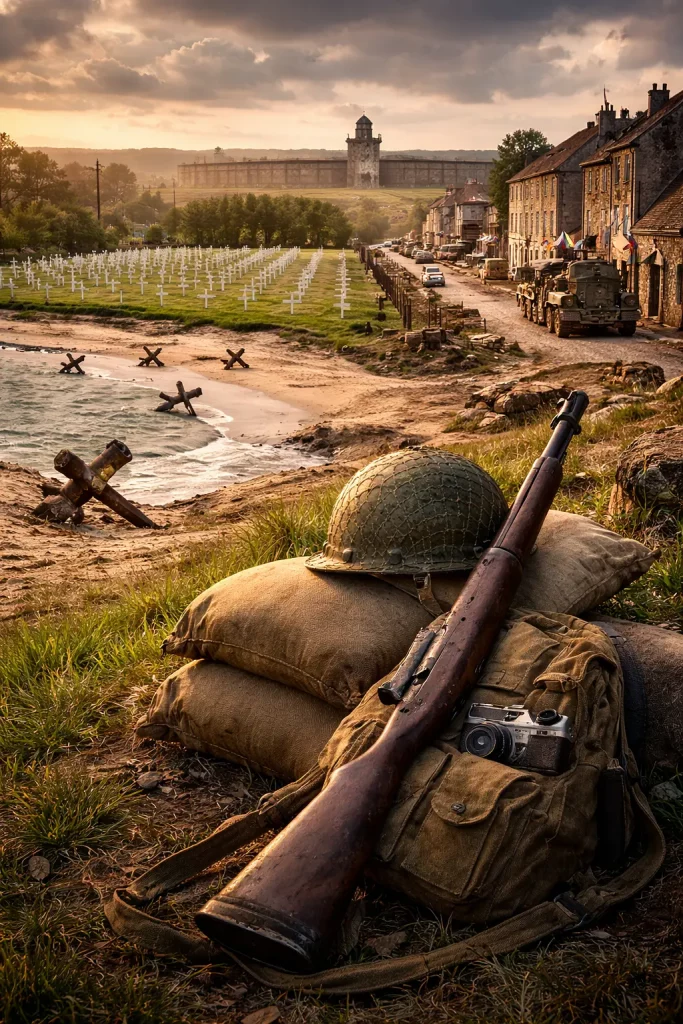
Normandy Hit Me Hard (OverlordTour)

We met our guide near Bayeux at 8 a.m. It was cool and windy. He had a folder of old photos and a sand map he drew with his finger. My group had seven people. A retired nurse, a father and son, a quiet couple, and me. I brought a ham-and-butter sandwich from a bakery. I ate it fast in the van.

Stops we made:

  • Pointe du Hoc: those cliffs look like broken teeth. Wind stung my face. We had only 30 minutes because buses kept coming.
  • Omaha Beach: I took off my shoes. The sand was cold and clean. A man beside me pressed his palms to the ground and said nothing.
  • Colleville American Cemetery: the grass looked like someone combed it. We stood for the flag lowering. I cried a little, and I’m okay telling you that.
  • Sainte-Mère-Église: the church with the parachute on the roof. It looks odd and brave at the same time.

What I loved:

  • Small group. Lots of time for questions.
  • The guide used aerial photos. He showed us hedgerows and how they slowed tanks.
  • We got tiny stories. A baker who hid men. A child who watched from a hedge.

What I didn’t love:

  • Pointe du Hoc felt rushed. It was busy.
  • Weather swings are real. My ears were warm, my feet were wet. Bring socks.

Would I book again? Yes. OverlordTour felt careful and proud, not salesy.


Berlin On Foot Feels Honest (Insider Tour Berlin)

This was a three to four-hour walking tour. It started near the Brandenburg Gate. We stopped at the Memorial to the Murdered Jews of Europe. We walked to the Topography of Terror and the site of Hitler’s bunker (it’s a parking lot now). The guide drew a line with his arm and said, “This was the border. Here. Right here.” That stuck.

We took a coffee break at a small café near Potsdamer Platz. I had a flat white and a pretzel, which sounds silly on a war tour, but my feet were grateful.

Good:

  • Clear route. Short walks between big stops.
  • The guide explained names and dates in plain words. He also said, “If you forget a date, remember a face,” and I kind of loved that.

Less good:

  • The group was about 20 people. It was fine, but I do prefer smaller.
  • If you want deep, deep detail, book a private guide. This tour is a strong base layer.

Auschwitz-Birkenau: Quiet Hours From Kraków

This one is hard. It should be. We left Kraków early. The bus was clean and quiet. At Auschwitz I, we used headsets. Our guide never raised her voice. She didn’t need to.

I walked slow. I kept my hands still. Birkenau is wide and open. You can hear wind move across the tracks. I didn’t take many photos. It felt wrong for me, personally.

What to know:

  • It can feel rushed. There’s a lot to see, but the path is set.
  • Bring water. Wear soft shoes. Leave snacks for after.
  • Be gentle with your day. I didn’t plan anything fun right after. I just walked by the Vistula River and looked at the water.

I’m glad I went. I’m also glad I left space for the feelings after.


Bastogne: Foxholes, Stories, And A Star-Shaped Memory

I took a morning bus to Bastogne. The Bastogne War Museum uses an audio guide that follows a few people’s lives. You sit in rooms where scenes play out with sound and light. It’s not cheesy; it’s careful.

Then I hired a local driver for two hours. We went to Bois Jacques, where the “Easy Company” foxholes are. You can see them. You can stand at the edge and look into the trees. It was quiet. Just birds and the sound of your own breath.

We also stopped at the Mardasson Memorial. It’s a big star. Walk up. Look out over fields. It’s simple and strong.

Good:

  • The museum flows well. The stories feel human.
  • The foxholes are the part I still think about.

Less good:

  • Without a car, reaching spots around town can be clumsy. A driver helps.

Also, the hot chocolate in town? Thick and perfect. Little joy, big day.


Arnhem: Bridges, Bikes, And A Very Good Apple Pie

Arnhem surprised me. I booked a small, family-run tour. My guide had a binder of maps, plastic protectors and all. We stood by the John Frost Bridge. We talked about “a bridge too far,” about plans that looked neat on paper and fell apart in rain and fog.

We went to the Airborne Museum at Hartenstein in Oosterbeek. It has a basement with a battle scene you walk through. It’s a bit loud, but it explains a lot.

At a café, I had apple pie with a mountain of whipped cream. War talk and pie. It felt odd, but it felt real. Life keeps moving, even in the heavy places.


Eagle’s Nest And The Mountain Air

From Munich, I booked a day trip to Berchtesgaden. The bus climbs, then you go through a long tunnel and take the brass elevator up. The view at the Eagle’s Nest is wild—blue and green in every direction. The Documentation Center down the hill is the real classroom, though. It tells the story of the regime, the town, and the people who lived under it.

Heads-up:

  • Weather can cancel the lift. Clouds roll in fast.
  • Very busy in summer. Early starts help.

I liked the split: big view up top, heavy history below. Both matter.


Little Things I Wish I Knew

  • Wear layers. Europe changes moods fast.
  • Small groups help you learn more. Vans beat big buses for me.
  • Eat local and simple. A galette in Bayeux, bratwurst in Berlin, pierogi in Kraków. Food helps you breathe between stops.
  • Bring a pen. I marked names and places in my guidebook as I went.
  • If you go near June 6 in Normandy, book months ahead.
  • Respect the spaces. Speak soft. Listen more than you talk.

If you need a wallet-friendly place to sleep between these history-heavy days, the European Guesthouse puts you close to train lines without draining the tour fund.


So, Who Should Book These?

Teachers. History buffs. Kids who read a lot and ask big questions. Families who want more than dates. If you can walk a few miles and handle heavy stories, you’ll be okay. If you need timeouts, take them. I did. I just sat on a bench sometimes and looked at trees.


My Quick Picks If You’ve Got Limited Time

  • One day: Normandy with OverlordTour.
  • Two days: Add Berlin’s walking tour.
  • Three to four days: Add Auschwitz from Kraków or Bastogne with a foxhole visit. Pick the one your heart pulls toward.

I went for my grandpa. I stayed for me. These tours didn’t fix anything. They didn’t try. They showed me people—brave, scared, flawed, kind. That was enough.

If you go, bring a warm hat, a good guide, and an open mind. The rest, somehow, shows up when you need it.

—Kayla Sox
Published
Categorized as Sites

I Skied My Way Across Europe. Here Are The Resorts I’d Go Back To.

You know that feeling when your boots click, and the world gets quiet? I chased that feeling across Europe one long winter. I took trains, packed wet gloves in hotel hair dryers, and ate way too much cheese. I skied big names and small corners. Some days were magic. Some days were, well, wobbly. If you’re after the play-by-play of that journey, I’ve laid it out in full in this extended trip report.

For a deeper dive into the continent’s pistes and villages, you can cross-reference my notes with this comprehensive guide to ski resorts in Europe and this analysis of the best ski resorts in the UK and Europe; both resources pack in run recommendations, maps, videos, and rankings that helped me narrow my hit list.

Here’s what stuck with me—and where I’d send a friend.

How I Picked (Real Quick)

  • Snow that holds up past lunch
  • Trails for different levels in one area
  • Solid lifts (less time in lines)
  • Good vibes: food, music, village
  • A “wow” run that I still think about

This time around, I booked some of my most memorable stays via European Guesthouse, a resource worth scrolling if you want ski-friendly digs sprinkled across the continent.

Alright, let me tell you where I went and what felt real.

St. Anton, Austria — Big Legs, Big Grins

St. Anton felt like the gym and a party teamed up. I rode the Galzigbahn in the morning, hit groomers that looked like corduroy, and tried to keep up with locals who ski like they breathe. I made it to the top of Valluga I. The wind bit my cheeks. I didn’t go past the gate to Valluga II because I didn’t have a guide, and that part needs one. Safety first.

Pros:

  • Huge linked area (Lech, Zürs, Stuben). You can ski all day and still feel small.
  • Après at MooserWirt is wild. I lost a glove and found new friends.

Cons:

  • On a powder day, it gets tracked fast.
  • Steep spots can scare newer skiers.

Tip: Start early, and watch the avalanche info boards. I kept a small shovel in my pack when we ventured off the side.

Val d’Isère–Tignes, France — Steep, Cold, Worth It

La Face de Bellevarde looks smooth from the chair. It isn’t. In the afternoon, it turned icy, and my legs shook. I loved it anyway. Over in Tignes, the glacier stayed soft when the lower slopes baked in sun. I ate tartiflette at a tiny place near the Solaise lift and then wanted a nap.

Pros:

  • Massive terrain and strong snow record.
  • Blues for cruising and blacks for ego checks.

Cons:

  • Can be pricey.
  • Wind on the glacier can shut things down.

Tip: Ski La Face early. Then hop to Tignes for lunch and laps on wide reds.

Zermatt, Switzerland — That Mountain Stares Back

The Matterhorn frames every turn. I couldn’t stop looking up. I took the lift to Matterhorn Glacier Paradise (it’s high), then skied almost all the way to town. Long, steady, pure joy. The village felt like a snow globe with bells and stone barns.

Pros:

  • Long runs, huge vert, high altitude.
  • Car-free town with cozy spots for fondue.

Cons:

  • Prices made my eyes water.
  • Whiteout days are rough up high.

Tip: I carried an extra buff and sunscreen. The sun hits hard at that height. Also, book lunch away from the main hub to dodge the crowds.

Verbier, Switzerland — Steeps, Moguls, And A Quiet Side

I love Verbier for two moods. Mont Fort gives you big-mountain feel, with views that make you stop and stare. Then I slip to Bruson across the valley for trees and calm when a storm rolls in. I survived Tortin’s moguls. Barely. My knees talked for two days.

Pros:

  • Off-piste heaven with guides everywhere.
  • Great mix of tough and chill.

Cons:

  • Lift pass adds up fast.
  • Some runs get busy mid-morning.

Tip: Storm day? Go to Bruson. Sunny day? Mont Fort first thing.

Chamonix, France — Wild Beauty, Bring A Guide

Chamonix is not “one big resort.” It’s pieces. Each one has a job. I went up Aiguille du Midi for the Vallée Blanche with a guide. Walking the ridge with crampons made my stomach flip. The glacier felt silent and huge. It’s long and lovely, but don’t treat it like a normal trail. Gear matters.

Pros:

  • Jaw-dropping scenery and serious terrain.
  • Town with real life and great bakeries.

Cons:

  • Not great for beginners.
  • You ride buses more; lifts aren’t all linked.

Tip: Book a guide early. Eat a croissant after. You’ll have earned it.

Kitzbühel, Austria — Classy, Low, And Fun When It’s Cold

I chased the Streif, the Hahnenkamm race run. I couldn’t ski it like they do on TV, but I slid down a milder line and still felt brave. When snow is good, the place skis like a dream. When it’s warm, grass peeks through.

Pros:

  • Charming town and smooth groomers.
  • Race history makes every turn feel fancy.

Cons:

  • Lower altitude means iffy snow in mild weeks.
  • Some flats can tire boarders.

Tip: Watch the weather. Cold snap? Go. Warm spell? Maybe pick higher ground.

Val Gardena & The Sella Ronda, Italy — Pretty Loops, Pasta Stops

I did the Sella Ronda both ways—orange route one day, green the next. The views of the pale Dolomite cliffs look unreal, like a set piece. The skiing? Friendly and fast. Some flats had me pushing with poles, but I didn’t mind because lunch was carbonara. Priorities.

Pros:

  • Endless lifts, top-notch grooming.
  • Food that makes you smile.

Cons:

  • If it hasn’t snowed, it can feel firm.
  • Popular weeks get crowded.

Tip: Start early and keep moving so you make it around before the lifts close.

Cortina d’Ampezzo, Italy — Glam, Sun, And Racy Lines

I skied Tofana, where they hold races. The snow sparkled in the light. After, I sipped an espresso on Corso Italia and people-watched. It felt like a movie set, but with actual skiing.

Pros:

  • Sunny bowls and solid reds.
  • Style and snacks, everywhere.

Cons:

  • Some links between areas take time.
  • Lifts vary; some are newer than others.

Tip: If a storm hits, trees near Socrepes help with flat light.

Alpe d’Huez, France — The Long One That Burned My Quads

Sarenne is the long black run you hear about. I did it once and then needed fries. The resort has sunny slopes and a big mix of trails. I liked the gentle greens for warm-up laps, then the big stuff after.

Pros:

  • Huge variety with great views.
  • Long runs that feel like a journey.

Cons:

  • Sun can turn lower runs soft in spring.
  • Some bottlenecks at peak times.

Tip: Hit Sarenne early and pack water. Your legs will thank you.

Andorra (Grandvalira) — Budget-Friendly, Chill Vibe

Soldeu and Pas de la Casa gave me wide blues to practice carving and reds to test me a bit. Lessons were cheaper than in the Alps, and the instructors were kind but firm. It can get windy, though. One day my goggles felt like they had sand in them.

Pros:

  • Good prices for passes, food, and ski school.
  • Big, modern lift system.

Cons:

  • Less steep than big-name spots.
  • Wind can shut lifts.

Tip: If it’s gusty up high, stay sheltered in the trees near El Tarter.

LAAX, Switzerland — Park Kids And Playful Laps

LAAX felt like a skate park on snow. I’m not a big jumper, but the smaller lines let me try a box without fear. The big halfpipe made me clap for strangers. On non-park days, I cruised long reds under Crap Sogn Gion. Yes, that’s the real name. It made me smile.

Pros:

  • World-class parks and steady groomers.
  • Efficient lifts.

Cons:

  • Can feel scene-y if you’re not into park life.
  • Accommodation can be pricey near the base.

Tip: Even if you don’t hit features, the side hits are pure fun.

Little Things That Made A Big Difference

  • Boots: In Andorra, my rental boots bruised my shins. The shop swapped the liner, and it saved my week. Don’t be shy. Speak up if something hurts.
  • Weather windows: In Zermatt, we waited out a whiteout with hot chocolate, and when it cleared, we got the best run of the trip. Patience pays.
  • Food breaks: In Italy, I learned to take real lunch, not just a bar. After pasta, I skied better. Weird, but
Published
Categorized as Culture

I Went Looking for the Smartest Country in Europe

I spent a year asking a simple, tricky question: which country in Europe feels the smartest? Not just on paper. In real life. In the classroom, on the tram, in a lab, and even at the bakery line when things go sideways.

I kept notes. I asked nosy questions. I rode a lot of trains. Here’s what stuck.
If you're plotting your own brainy grand tour, the folks at European Guesthouse maintain a handy map of affordable, study-friendly stays all over the continent.
For the full, data-packed version of this quest, you can peek at my detailed write-up as well.

How I judged “smart”

I didn’t use one big test. I used four small ones:

  • School results (think PISA scores; that’s how 15-year-olds do in math, reading, and science).
  • Daily problem solving (digital services, forms, transit).
  • Research power (labs, patents, and R&D—money spent on new ideas).
  • Culture of learning (libraries, meetups, language skills).

Not perfect. But fair enough for a human with a backpack and a pencil.

Estonia: small, fast, and very online

Tallinn felt like the future, but cozy. I got from the airport to the city on a tram with a tap of my card. A café owner told me she files taxes online in minutes. No drama. She said her kid’s school sends grades through an app. I saw the notification pop on her phone. Ping. Done.

In Tartu, I visited a teen coding club above a grocery store. Fifteen kids. Laptops open. One girl showed me a tiny game she built in Python. She shrugged like it was no big deal. It was.

Estonia’s students test near the top in Europe. The country runs most public services online. It feels normal there. That’s the point. The latest Eurostat education snapshot backs that up, ranking their teens among the EU’s front-runners in reading, math, and science.

Finland: calm classrooms, sharp minds

Helsinki in winter is soft and quiet. I sat in Oodi Library with warm socks and a hot cocoa. It’s not just shelves. It’s a maker space. Sewing machines. A 3D printer humming like a cat.

I talked with a 9th-grade teacher in Espoo. She smiled and said, “We trust students.” Less homework than I’m used to. More breaks. Still, kids do great on PISA. The vibe is calm, but the work is real. I like that mix: gentle and strong.

Switzerland: brains with a stopwatch

Zurich runs on time. It just does. My train hit the mark to the minute. Twice. I went to an open day at EPFL in Lausanne and watched a robot arm stack blocks, smooth and quiet. A student walked me through a clean chart on control loops. Simple, clear, kind.

Switzerland pours a lot into research. Big labs. Lots of patents per person. And people know their stuff, but they don’t brag. They just fix things. Eurostat’s December 2024 analysis on research spending reports that Switzerland still out-invests most of its neighbours in R&D intensity. It’s also where I rediscovered fresh alpine powder—fuel for the later trip when I skied my way across Europe.

The Netherlands: clear words, quick thinking

In Amsterdam, I biked to a tiny tech meetup above a bar. A speaker walked us through AI bias using plain words and funny stories. No fluff. People asked sharp questions. The room nodded in rhythm, like a good jazz set.

Dutch folks speak great English. They explain hard ideas like they’re telling you how to fix a flat tire. That matters more than we think. Clear, confident digital chat matters too—whether you're hashing out a project brief or sending a cheeky late-night message. For a playful crash course in the latter, check out these curated WhatsApp sexts that break down clever lines and show how to adapt them for smarter, more engaging conversations of your own.

Ireland: wit, code, and warm light

Dublin feels bright, even on a gray day. I sat in a co-working space near the river and watched a group ship a small app right before lunch. Fast push. Quick test. Then tea. I heard sharp humor in every chat. A coder showed me a trick to clean SQL joins. Simple and neat.

Trinity College library made me hush, even before the sign. That old wood smell? It makes your brain sit up straight.

Sweden: ideas that scale with heart

Stockholm gave me both ABBA and GitHub jokes in one hour. At a small talk near KTH, someone mapped a new battery test to a kitchen timer story. It clicked. Sweden spends big on research and tends to ship ideas that people actually use—music, payments, games. Smart, but soft around the edges.

Travelers who appreciate Sweden’s long-standing embrace of gender inclusivity often look for similarly welcoming spaces when they return home. If you’re back in the States and curious about vetted, trans-friendly companionship options, you can browse the listings on One Night Affair’s TS escort page for Dearborn. The directory focuses on verified profiles, clear communication, and discretion—handy for anyone who wants a straightforward, respectful way to arrange a meetup.

Real moments that swayed me

  • I booked a doctor visit online in Tallinn faster than I can order pizza at home.
  • I watched a Finnish teacher end class with a five-minute walk outside. Kids came back sharper.
  • In Zurich, a ticket machine ate my coins. A staffer fixed it in two minutes and handed me a receipt, no fuss.
  • In Amsterdam, a teen explained a tricky math proof to her grandpa at a café. He got it. He smiled like a kid.
  • In Berlin, I joined a WWII walking tour that made code-breaking stories feel present (trip notes here).

So…which felt the smartest?

Here’s the twist: it depends on what you call “smart.”

  • For school results and smooth digital life: Estonia.
  • For steady teaching and deep reading: Finland.
  • For research muscle and precision: Switzerland.
  • For clear talk and fast problem solving: the Netherlands.
  • For creative spark and code with charm: Ireland.
  • For idea-to-product flow with care: Sweden.

If I have to pick one, I’ll say Estonia. It surprised me the most, kept working the best, and stayed friendly while doing it. But Switzerland is right there if you care most about labs and patents. Finland if you value calm minds. It’s close. Closer than I thought.

My simple scorecard (the short version)

  • Estonia: quick services, top student scores, zero fuss.
  • Finland: kind schools, strong results, world-class libraries.
  • Switzerland: precision everywhere, big research.
  • Netherlands: crisp talk, high skill, easy to learn from.
  • Ireland: brainy plus warm, strong tech scene.
  • Sweden: research + real products, thoughtful teams.

Final word

Smart isn’t just numbers. It’s how a place helps you think. How it treats your time. How it explains hard things without making you feel small.

Estonia wins my notebook. But ask yourself: What does “smart” mean to you? If you say “curious and calm,” you may land in Finland. If you say “build big and exact,” you may ride a Swiss train and grin.

You know what? That’s the fun part. Europe gives you flavors of smart. Pick one, pack a pen, and go see.

Published
Categorized as Culture

The Best Skiing in Europe, Through My Eyes

I chase winter. I budget for it, I plan for it, and I live for that first cold bite of air at the top of a lift. I’ve skied across Europe for years now—big names, small hills, and a few places that still scare me a little in a good way. Here’s what actually stuck with me. The wins, the flaws, and the tiny things you only learn when your boots are wet and your sandwich is cold. For an even deeper dive, I shared my take on the best skiing in Europe through my eyes over on European Guesthouse.

What I Care About (and Maybe You Do Too)

  • Real snow, not just talk.
  • Terrain that makes me grin.
  • Food that doesn’t feel like a wallet punch.
  • Lifts that move, not crawl.
  • A vibe that fits—rowdy, chill, or family calm.

You know what? No place nails all of that every day. But some come close. You can see how these criteria stack up in broader global round-ups too, like this run-through of the best ski resorts in the world.

Val d’Isère & Tignes, France: Big, Bold, Windy

I spent a week here and got the whole mix. One morning I dropped La Face de Bellevarde just after first chair. The corduroy was perfect and mean. By lunch, the wind howled off Grande Motte, and I hid in a cafe with hot chocolate and a wet buff.

  • High point: Endless laps on blues and reds that still feel fast. Folie Douce for loud, silly après.
  • Low point: Wind shuts things down. Lift lines can swell on holidays.
  • My tip: Hit La Daille early. Save the glacier for clear days.

St. Anton, Austria: Steep-ish and Wild at Night

St. Anton felt like a party wrapped in real skiing. I took a guide off Valluga on a cold bluebird day. My legs shook, but in a proud way. After, MooserWirt was chaos with skis on shoulders and music you pretend you don’t know.

  • High point: Off-piste with a guide. Good snow when storms line up.
  • Low point: Crowds on the main drags. Hotel prices bite in peak weeks.
  • My tip: Don’t mess with the terrain here without gear and a pro. It looks friendly. It is not.

Chamonix, France: Not a Resort, a World

Chamonix is a town with many ski areas, and that’s the deal. Buses, trams, and then boom—huge mountains. I skied the Vallée Blanche with a guide. That ridge walk from Aiguille du Midi? My heart hammered. The glacier fields felt endless. It’s magic, but it’s big-mountain stuff.

  • High point: Views that make you quiet. Long runs that make your legs buzz.
  • Low point: Weather shuts lifts fast. The shuffle between areas can eat time.
  • My tip: Book a guide. Bring snacks. Be patient with the plan.

Verbier, Switzerland: Sunny, Social, and Spicy

Verbier charmed me. I got lost, then found myself on Tortin, bouncing through bumps and laughing. The 4 Vallées links feel huge. Mont Fort on a clear day looks like a painting.

  • High point: Freeride lines, if you know where to go. Great ski schools for a tune-up.
  • Low point: It’s pricey. Powder gets tracked out fast.
  • My tip: Ski lunch early to dodge crowds. Pack a pocket sandwich anyway.

The Dolomites, Italy: Sella Ronda and Slow Smiles

This place is joy. I did the Sella Ronda loop clockwise, then back the other way the next day. The rock towers glow at sunset, like someone turned the sky warmer. The food on-mountain? It’s not fair how good it is.

  • High point: Groomers like silk. Pasta and speck for lunch, every time.
  • Low point: Snow can be thin off-piste. You chase sun more than storms.
  • My tip: Alta Badia for easy miles. Cortina for glam and big views.

Zermatt, Switzerland: The Matterhorn’s Home Turf

I skied here on a cold blue day and just kept staring at that peak. The glacier runs are long and smooth. Crossing to Cervinia for a late pizza felt like cheating, in a nice way.

  • High point: Views you’ll remember for years. Long, leg-burning laps.
  • Low point: Wind can close lifts. Prices sting.
  • My tip: Start early from the Zermatt side. Watch the last lift times back.

Engelberg, Switzerland: Powder When It Hits

Engelberg taught me respect. I skied Laub with a guide after a storm, and the snow swallowed my shins. It was soft, deep, and a little spooky. On-piste is fine, but the draw is the big stuff.

  • High point: Freeride days that feel like a secret.
  • Low point: When it’s not snowing, it feels small.
  • My tip: Bring avalanche gear and know it. Or hire someone who does.

La Grave, France: One Lift, No Ego

I went once. I still think about it. It’s a single old cable car, no groomed runs, and no safety net. I skied with a guide, stayed humble, and took it slow.

  • High point: Raw mountain. Pure lines.
  • Low point: Not for beginners. Not even close.
  • My tip: If you wonder “Should I get a guide?” the answer is yes.

Budget and Hidden Gems That Made Me Smile

  • Bansko, Bulgaria: I paid less for a whole week here than two days in Switzerland. Groomers were fun. Weekends were busy. Icy mornings, then soft by noon. Kebapche and red wine after.
  • Jasná, Slovakia: Modern lifts, friendly vibe, and freeride zones marked out. South-facing bits get slushy in spring. Night skiing felt cozy.
  • Grandvalira, Andorra: Big mileage, smooth grooming, solid value. Wind hits sometimes, but the terrain suits most folks.

If you’re piecing together an affordable ski circuit, browsing the curated lodges on European Guesthouse can surface cozy beds a lift’s walk away without wrecking your wallet.

Family and Mixed Groups

  • Saalbach-Hinterglemm, Austria: A big circuit that flows. Reds and blues you can stack all day. Great huts with soup that warms your whole mood. Snow can feel thin late season.
  • Les 3 Vallées, France: Courchevel, Méribel, Val Thorens—huge scope. Something for everyone. Also busy, also pricey. I spilled hot chocolate on a chair here and still think about it.

When I Go and Why

  • January and February: Colder, better snow odds. Short days, though.
  • March: Sun and softer snow. Long lunches make sense.
  • Late season: Sweden’s Åre has wind, but fun night skiing. Riksgränsen gave me a midnight sun lap once in May, and I got quiet on that chair. It felt like a secret.

On rest days, trading skis for history keeps the trip balanced; the World War II tours I took across Europe that actually felt real added context to the valleys I normally only race through.

Food and Vibe, Because It Matters

  • Italy: Best lunches. No contest. I plan my runs around rifugios.
  • France: Cheese and crusty bread and a nap after.
  • Austria: Après that explodes at 3 p.m. and somehow ends with schnitzel.
  • Switzerland: Polished. Pricey. Pretty.

Gear I Used (and What I’d Change)

Most trips, I bring 95 mm all-mountain skis and a light touring pack. In Verbier after a storm, I rented wider planks and it was worth it. In Chamonix, I wore a harness and carried a simple glacier kit for Vallée Blanche, with a guide. Helmet always. Sunscreen always. I learned that the hard way in Val Thorens, with a raccoon tan in every photo.

Quick Picks

  • Best powder days: Engelberg, St. Anton, Chamonix (with a guide).
  • Best groomers: Dolomites, Grandvalira, Les 3 Vallées on a quiet morning.
  • Best for families: Saalbach, Val Thorens, Alta Badia.
  • Best views: Zermatt, Cortina, Chamonix.
  • Best value: Bansko, Jasná, Andorra.
  • Best après: St. Anton, Ischgl, Val d’Isère.

If part of the fun for you is meeting new people off the slopes—especially when the après scene shifts from schnapps to late-night flirtation—you might want to explore the online side of that social world; the detailed breakdown in Is Fuckbook Legit? Full Review shows how the platform works, what you get for free versus premium, and whether it’s actually useful for lining up casual connections before your next powder day. Likewise, when ski season wraps and you find yourself stateside—maybe laying over in

Published
Categorized as Culture

The Best Road Trip Routes in Europe I’ve Actually Driven

I measure trips in snacks and songs. Also gas stops. And views that punch you right in the heart. These are the drives I’ve done myself, seat belt clicked, coffee on the dash, maps offline. Some were smooth. Some were chaos. All of them stuck with me.

You know what? I’d drive them again tomorrow.

For a distilled checklist—mileage, fuel stops, and my most reliable snack brands—grab the cheat-sheet in The Best Road Trip Routes in Europe I’ve Actually Driven.

Quick note I learned the hard way: carry coins for toll booths, download offline maps (I use Google Maps and Waze), and check if you need a vignette sticker. Also, fill up when you can. Empty roads can be sneaky.


Portugal’s N2: Chaves to Faro (The Slow Gold Line)

The N2 is Portugal’s Route 66. It runs down the spine of the country. I started in Chaves. I ended with sand between my toes in Faro. It felt like a ribbon through time.

  • My car: a little diesel Golf, steady torque, no fuss.
  • Best bit: the Alentejo stretch. Cork trees. Honey light. Quiet towns.
  • Stop I loved: a pastel de nata and espresso in Lamego. Simple joy.
  • Where I slept: a whitewashed guesthouse near Almodôvar. I heard crickets.
  • Annoying thing: speed traps near villages. And tractors. Lots of tractors.

Before I set off, I scroll through stays on European Guesthouse to lock in small-town rooms that feel as authentic as the road itself.

Tip from me: get the N2 passport stamp book at gas stations. Silly? Maybe. But it turns a road into a story.

For detailed insights into Portugal's N2 road trip, consider this comprehensive guide.


Spain’s Green North: San Sebastián to Cudillero (Anchovies and Cliffs)

This route smells like salt and rain. It rolls from the Basque Country past Cantabria and Asturias. I hugged the N-634 and the A-8 when I got tired.

  • Eat in Getaria. Anchovies. Grilled fish. You’ll lick your fingers.
  • Walk the Flysch cliffs in Zumaia. The rock looks like folded pages.
  • Camp at Playa de Oyambre near Comillas. I fell asleep to waves.
  • Detour up to the Picos de Europa. The Covadonga Lakes felt like a dream.

It rained sideways near Llanes. I laughed, then I swore, then I kept driving. That’s the north. It’s moody, and it’s worth it.


France: Route des Grandes Alpes (Passes, Cheese, and Goosebumps)

From Thonon-les-Bains to Menton, this road climbs and drops like a song. Col de l’Iseran. Galibier. Izoard. Names that make your palms sweat a little.

  • I ate Beaufort cheese so good I bought a second wedge.
  • Sunrise at Col d’Izoard turned the world pink. I got quiet.
  • I rolled through Val d’Isère and waved at cows with bells.
  • Watch brakes on long descents. Smell that? That’s your pads.
  • Powder chasers: several of these passes back right up to ski domains I covered in the resorts I'd return to again and again.

Fog found me near Galibier. I slowed to a crawl. I said I wasn’t scared. I lied a bit. Then the sky cleared, and I laughed out loud.


Italy: Amalfi Coast SS163 (Beauty With Horns)

I rented a tiny Fiat 500 in Sorrento. Good call. That road is thin. Buses own the curves, and they will use the horn like it’s a language.

  • Park early in Vietri sul Mare or use paid lots. Don’t gamble.
  • Lemon groves hang over blue water like a movie set.
  • I had a warm sfogliatella in Minori. Flaky. Sweet. Gone in two bites.
  • Ravello at dusk felt like velvet.

Would I drive it in July again? Maybe not. Too many people. But at sunrise in May? Yes. Yes I would.


Scotland: The NC500 (Edges and Echoes)

I went anti-clockwise from Inverness. The single-track roads ask for manners. Use the passing places. Wave. Everyone waves back.

  • The Bealach na Bà to Applecross is a serious climb. Hairpins like a corkscrew.
  • Midges tried to eat me near Gairloch. I wore a head net. Fashion!
  • Fish and chips in Ullapool. Hot and crisp and perfect.
  • I slept at Sands Caravan and Camping. Good showers. Wide sky.

Fill up in Inverness and Durness. Don’t chance it. Oh, and sheep. They stare like they know your secrets.


Ireland: Wild Atlantic Way (I Did the Dingle and Connemara Bits)

I didn’t do the whole thing. I took two bites. Both were grand.

  • Slea Head Drive on the Dingle Peninsula made me tear up. Those cliffs.
  • A farmer waved me through a sudden cow jam. I waved back.
  • In Connemara, the Sky Road near Clifden runs high and bright.
  • Music in Doolin at night. Fiddle, pint, soft voices.

The roads are narrow. The views are large. I slowed down and felt rich.


Romania: Transfăgărășan DN7C (The Drama Queen)

This road feels like a loop-the-loop. Hairpins climb to Bâlea Lake, then drop and twist and rise again. I drove a Dacia Duster. It fit the scene.

  • I saw a bear by the guardrail. I stayed in the car. Please do the same.
  • Rockfall signs are real. I heard a ping on the hood. Ouch.
  • The lake at the top felt cold even in summer.
  • The road closes in winter. I went in August. Good choice.

Some folks call it the best road on Earth. I won’t argue. Not today.

For authoritative information on the Transfăgărășan Highway, you can refer to the Wikipedia article.


Norway: Lofoten E10 (Midnight Sun, Midnight Snack)

Norway isn’t cheap, but the E10 through Lofoten? Worth every coin. Bridges, bays, sharp peaks that look drawn with a knife.

  • I slept in a red rorbuer cabin in Å. It creaked in a sweet way.
  • Reine at midnight glowed like a secret.
  • The roads are narrow and clean. No trash. Please keep it that way.
  • Rain came fast. Then it left. Then it came back. Bring a shell.

I ate cinnamon buns from a tiny bakery in Henningsvær. Warm, sticky, gone in seconds. No regrets.


Germany: The Romantic Road (Castles and Pretzels)

From Würzburg to Füssen, it’s storybook calm. My map looked like lace. Half-timber towns. Slow bends. It felt…kind.

  • Rothenburg ob der Tauber is almost too cute. Still, I stayed longer.
  • Nördlingen sits inside a crater. Wild, right?
  • Park in Füssen and bus to Neuschwanstein. Save your nerves.
  • I snacked on pretzels the size of my face. Salt is a friend.

If your wheels tend to turn toward memorials and battlefields, carve out an extra day or two—my report from World War II tours across Europe flags the sites that hit hardest and pairs well with the gentle stretches of Bavaria.

I kept the speed steady and let the radio hum. It’s a gentle drive. Not every trip needs to shout.


Quick Gear and Road Notes I Wish Someone Told Me

  • Apps: Google Maps offline, Waze for speed checks, Park4Night for camping spots, ViaMichelin for toll costs.
  • Money: coins for old toll booths; some card readers sulk in rain.
  • Car stuff: a real spare wheel if you can; a compressor if not. A headlamp. A microfibre towel. Wet maps are sad.
  • Fuel: in Scotland and Norway, fill early. In Spain and Portugal, prices drop at big supermarkets.
  • Seasons: May–June and September feel sweet. July crowds can fray your joy.
  • Manners: on single-track, use passing places. Wave. It matters.

So, Which One Is “Best”?

It depends on your mood.

  • Want hush and honey light? Portugal’s N2.
  • Want salt, cliffs, and good food? North Spain.
  • Want high passes and that “I did it” grin? France or Romania.
  • Want pure romance? Germany’s soft roll.
  • Want wild edges? Scotland, Ireland, or Norway.

I chased views. I found people. I found myself a bit too, which sounds cheesy, but hey, road trips do

Published
Categorized as Culture

I got caught by a European Arrest Warrant. Here’s my honest take.

I never planned to learn about the European Arrest Warrant from a cold bench and a paper cup of tea. But that’s how it went. I’m Kayla, and yes, I was actually arrested on an EAW while changing planes. Not my finest travel day. Still, I learned a lot, fast.

You know what? Some parts worked shockingly well. Some parts felt like a maze in a storm.

So… what is it, in plain words?

A European Arrest Warrant (EAW) lets one EU country ask another EU country to arrest and send a person back for a trial or to serve time. It’s like a fast track across borders. Police run your name. If there’s a match, they stop you. Then a judge decides if you get sent back. If you want the formal wording, the EU’s portal on judicial cooperation explains the nuts and bolts in detail.

It’s meant to be quick. If you agree to go, the decision can be made in 10 days. If you don’t, they get up to 60 days. That’s the idea, anyway.

Quick note: the UK now has a different system with the EU, but the feel is similar. Different label, same kind of steps.

How I got flagged at the airport

My stop was Lisbon. Gate C. I handed over my passport. The border officer scanned it. A beep. He looked up, then called another officer. My stomach dropped. They said there was an alert from Prague. Years ago, I’d had a scraped-up night there after a tiny street crash with a rental scooter. I paid a fee and thought it was closed. Turns out, the case had changed into a criminal damage thing later. No one told me. But the system did.

They took me to a small room. Clean, bright, boring. I got water. I asked for an English speaker. They brought one. That mattered.

The holding room: long hours, short answers

Time was weird in there. I was not chained or anything. But I couldn’t leave. They explained the basics: there’s a warrant; the judge would see me soon; I had the right to a lawyer and an interpreter. I signed a paper that I got those rights.

I asked for a copy of the warrant. They printed a summary. It had my name, date of birth, the Prague court, the offense in simple lines, and the max penalty. It looked like a form with boxes. Very dry. Very official.

Honestly, nothing happened for a while. It was a Friday. Weekends slow everything down. They didn’t say it, but I felt it.

The court bit: fast, but it still felt slow

Within about 36 hours, I stood before a judge in Lisbon. Not a big drama. A small room. The judge checked my ID. Checked that the warrant looked right. This judge doesn’t decide if I’m guilty. That part is for Prague. Here, they mostly check rules: is the paperwork in order, is this offense on the list, are there clear reasons to refuse, things like that.

I had a duty lawyer. She was calm and clear. She told me I could “consent to surrender,” which means I could agree to go to Prague right away. Or I could say no, and Portugal would take more time to review it. I said no. I wanted time to fix the mix-up.

The judge let me go home that night with a reporting duty. I had to check in twice a week. My passport stayed with the court. I didn’t love that. But it beat a cell.

What worked better than I expected

  • The paper trail was clean. I got a printed summary. I wasn’t guessing.
  • I had a lawyer and an interpreter without begging. That was huge.
  • The timeline had rules. Ten days if you say yes. Up to sixty if you say no. I could plan around that, sort of.
  • When my Prague lawyer found proof that the damage was paid and the case should’ve been closed, the issuing office listened.

A small win: on day 34, the Prague side withdrew the warrant. The Portuguese judge signed my release. I got my passport back. I cried. In a hallway. Not stylish at all.

What didn’t feel fair (or even sane)

  • It’s a blunt tool. One box ticked wrong can snowball into a lost weekend and a lost flight. That’s not a tiny thing.
  • You can’t argue your full case where you get arrested. That judge isn’t your trial judge. It’s like yelling at a ticket machine. It won’t change the menu.
  • Weekends slow the gears. If they catch you on a Friday, bring patience. And snacks, if they let you.
  • Names and dates matter a lot. But the system can still snag the right person for the wrong reason. Mine wasn’t mistaken identity, but it sure felt like a clerical trap.

Here’s the thing: it’s fast by court standards. It still feels slow when it’s your life on hold.

Little things I learned (the hard way)

  • Ask for the written warrant summary. Keep a copy.
  • Use the interpreter even if your language is “okay.” Legal words are sneaky.
  • Call your consulate. They can’t fix it, but they can nudge and explain.
  • Get a local lawyer and a lawyer in the issuing country. Both matter.
  • Tell them about meds right away. I had thyroid pills. They noted it fast, which helped.

If you find yourself grounded in an unfamiliar city while the legal gears grind, the loneliness can get real. In those stretches, you might appreciate browsing JustHookUp for quick, no-strings ways to meet nearby people, giving you a friendly distraction and a sense of connection while you wait out the paperwork.

Later, when I was finally free to plan my next steps, I stumbled across the practical city-by-city checklists on European Guesthouse and wished I’d read them before hopping between airports.

After clearing my name, I did a cathartic little road trip across the U.S. to shake off the airport jitters. If your own post-ordeal wanderings ever land you on Minnesota’s Lake Superior shoreline and you’re curious about a discreet, trans-friendly night out, consider browsing TS escort options in Duluth where you’ll find well-reviewed companions who know the city’s safest spots and can turn a potentially lonely layover into a relaxed, affirming evening.

A quick example I saw in the same hallway

A guy from Belgium—let’s call him Marco—was picked up on a shop case from Italy. He said he’d paid a fine. But the file hadn’t been updated. He consented to go back. He was on a van within a week. He texted later (from a new number): the Italian judge confirmed the fine and closed it in one hearing. Fast in the end, but rough on the way.

Who should care about this

  • Expats and students bouncing across countries.
  • Musicians and tech folks doing tours and short gigs.
  • Digital nomads who hold mail in one place and live in another.
  • Anyone with an old case that “seemed done.” If there’s a court, make sure it’s really done.

My verdict, plain and simple

The European Arrest Warrant is strong medicine. When it works right, it keeps real harm from slipping across borders. That’s good. But it’s also a hammer. It can hit small nails too hard. If you want to dive into how the system intersects with fundamental rights and recent court rulings, the EU’s Fundamental Rights Agency has a solid overview right here.

Would I trust it now? I trust the idea. I don’t trust the admin trail without checking twice. If you ever meet this thing, ask for papers, ask for help, and keep your calm. Easy to say, I know. But it helps.

If you’re reading this in a holding room, breathe. Drink the water. Use the lawyer. And make sure someone, somewhere, knows where you are.

Published
Categorized as Culture

I Chased Castles Across Europe: Here’s What Actually Stuck With Me

I grew up sketching towers on my school folders. So last year, I booked the tickets and went. I spent spring and summer hopping across Europe, one castle at a time. I learned a lot—like how stone stairs can beat a gym day, and how fog can make a palace feel like a dream you almost remember.

Were they worth it? Yes. Mostly. Let me explain.

If you're mapping out your own turret-to-turret trail, check the guides on European Guesthouse for routes and cozy bases that don’t blow the budget. Their write-up on the best road trip routes in Europe was gold when I needed to string rural fortresses together.

Neuschwanstein, Germany — Pretty, crowded, and uphill

I went in May, when the trees were bright green. I took the train to Füssen, then the bus to Hohenschwangau. The walk up is no joke. It’s steep. I sweated through my light jacket and then got cold at the top. So, layers matter. If you want the history, photos, and ticket details ahead of time, peek at the castle’s official site before you go.

Inside, no photos. The tour is short, but the rooms look like a storybook. My favorite spot wasn’t inside, though. It was the bridge, Marienbrücke. The view there? Wild. Clouds hugged the cliffs. People waited for selfies, and I waited too. Worth it.

Tip I learned the hard way: book a timed ticket. And if the shuttle is full, just start walking. It’s faster than standing in line forever.

Edinburgh Castle, Scotland — Cannons, views, and the 1 o’clock boom

I visited on a windy day in June. The esplanade had bagpipes in the distance, which sounds cheesy, but it gave me goosebumps. At 1 p.m., the gun fired. I jumped even though I knew it was coming. Details on opening hours and that signature cannon blast live on the Edinburgh Castle official page if you’re the planning type.

The Crown Jewels sparkle like they’ve got stories. Mons Meg, the big cannon, looks chunky and tough. The view over the city, with Arthur’s Seat in the back, hit me in the chest. Later, I grabbed a warm steak pie down on the Grassmarket. I ate it with cold fingers and a big grin.

Château de Chenonceau, France — Gentle and green and very human

I biked from Amboise on the Loire à Vélo path and rolled in dusty and happy. This place sits over the River Cher like it’s floating. The gardens smell like herbs and roses, and the florist room made me want to run home and arrange peonies, badly.

I brought a picnic and ate by the water. A duck stared me down. I gave it one grape and felt judged, but also seen.

Pena Palace, Portugal — A fairytale… that fog can swallow

Sintra gave me a moody day. Bus 434 up, tight turns, slow going. The palace colors pop—red, yellow, blue—and then vanish in mist. It felt like walking through cotton. Kind of magic, kind of chilly.

The terrace wind pushed my hair straight back. I held my pastel de nata like it was a tiny heater. I did the park paths too, which were quiet, mossy, and way less busy than the palace line.

Bran Castle, Romania — The “Dracula” one that isn’t, but still fun

I went in September and tried the chimney cake outside first. Warm sugar on my hands. The castle has narrow stairs and small rooms. It’s more home than fortress, and the wood creaks like it’s whispering. The Dracula stuff is touristy, sure. But the hilltop view is strong, and I liked poking around the courtyard. I even bought a silly bat magnet. No shame.

Alcázar of Segovia, Spain — A ship of stone and a thigh workout

From Madrid, I took a morning train. The alcázar looks like a ship nose cutting the sky. I climbed the Tower of Juan II—152 tight steps. My legs burned. The view over the red roofs and the aqueduct was crisp and clean, like the air had been washed.

I ate cochinillo after (roast suckling pig). Crispy skin that shattered a bit. Not fancy. Just perfect.

Eilean Donan, Scotland — Mist, midges, and a bowl of soup

I drove there on a gray July day. The castle sits where three lochs meet, and the stone bridge makes the photo we all know. I took that photo. Twice.

When the wind paused, the midges came. Tiny, bossy, and rude. I ducked into the café and got cullen skink. Hot, smoky, potato-rich soup. I felt my shoulders drop. The tide was low then, so seaweed framed the base of the walls. It smelled clean and wild.

Český Krumlov Castle, Czechia — Fairytale lanes and a bear in the moat

I walked over cobbles in shoes that were too soft. Rookie move. The castle has a baroque theater you can tour in small groups. It’s fragile and a bit strict, but fascinating. Also, yes—there was a bear in the moat. It stared like I owed it rent.

The Cloak Bridge viewpoint gave me a sweeping look at red roofs and the looping river. I bought a trdelník and got sugar on my sleeves. Again.

Conwy Castle, Wales — Weathered stone, big sky

I hit it on a day with sideways rain. The towers are open to the wind, and you can walk the town walls. I did, even with damp socks. The slate tones, the sea air, the gulls yelling—it all felt raw and honest. Less polish. More heart.

Windsor Castle, England — Polished and powerful

I went on a weekday morning and still queued for security. St George’s Chapel made me whisper without thinking. The State Rooms shine, but not cold. I liked the details in the wood and the quiet in the chapel the most. If you can time it, catch the Guard change. Yes, it’s crowded. Still worth watching once.


What I loved

  • Views that make you stop talking mid-sentence
  • Little clues of real life: kitchens, chapels, worn steps
  • How each place felt different—soft at Chenonceau, bold at Edinburgh, playful at Pena
  • Local food right after: pie, soup, pastries—it helps you remember

What bugged me

  • Crowds, especially midday
  • Timed tickets that sell out fast
  • So many stairs (bring knees that don’t complain)
  • Random closures or scaffolding that photobombs your big shot

Sometimes, though, I met fellow travelers who said the bustle and occasional curious stares actually added a thrill to the experience—like enjoying the idea of being on display. If that tug of exhibitionism intrigues you, the deep-dive on candaulisme unpacks the history and modern etiquette of consensual “being seen,” so you can explore the concept safely and with clear boundaries. And if your itinerary eventually takes you across the Atlantic to the American Midwest, you might appreciate the option to connect with a welcoming, trans-friendly companion through TS Escort Bismarck, a listing site that lets you browse verified profiles and arrange a discreet, respectful meet-up—perfect for turning a quiet layover into a memorable, confidence-boosting night out.

Quick tips I wish someone told me

  • Go early or late. Lunch hour is the worst.
  • Check the castle’s site the night before. Hours change.
  • Wear real shoes with grip. Cobblestones don’t care about your ankles.
  • Carry layers. Stone halls hold cold, even in summer.
  • Pack a tiny snack and water. A calm brain drinks first.
  • Audio guides help, but sometimes a short live tour hits better.

Costs, in plain terms

I paid a wide range. Some places felt fair for what you get (Conwy, Chenonceau). Some were pricey but still special (Neuschwanstein, Windsor). Student and family tickets help. City cards can cover a few spots in big towns. I kept a simple rule: if the view stuck in my head all day, the ticket was fine.

Families and access

Kids love cannons, drawbridges, and secret-feeling stairs. Strollers? Tough. Many routes are tight or uneven. A carrier works better. Most big sites have some ramps and helpful staff, but older towers are stair-only.

My small, honest regrets

I should’ve worn wool socks in Scotland. I should’ve booked Neuschwanstein a week earlier. I should’ve left more time for the gardens at Chenonceau. And I should’ve packed one less outfit and one more snack.

So… are castles in Europe worth your time?

Yes. Not every single one. But enough of them. Pick a few that match your mood. Want drama? Edinburgh or Segovia. Want romance? Chenonceau or Pena. Want a moody postcard

Published
Categorized as Sites

I Spent 3 Weeks City-Hopping in Poland: My Honest Take

I walked these streets. I ate the food. I rode the trams. You know what? Poland surprised me in the best way. It’s not flashy. It’s steady, warm, and a little quirky. I went in late spring with a small backpack and a big appetite. Trains were my thing. PKP Intercity got me between cities on time. Jakdojade helped with buses and trams. I paid by card almost everywhere. Easy.
When I wanted a break from hostels, I booked a room through European Guesthouse and found their cozy spaces a reliable haven no matter which Polish city I’d landed in.

For anyone wanting the granular day-by-day of that journey, I broke it all down in this extended diary of how I spent 3 weeks city-hopping in Poland.

Here’s the thing. Each city felt like a different room in the same house. Same core. Different mood.

Warsaw: Big City Brain, Soft Heart

At first, Warsaw felt cold. Glass towers, fast steps, no smiles. Then it opened up. I had pierogi at Bar Mleczny Prasowy. Cheap. Tasty. A grandma waved at me for no reason. I smiled back. That was it. I relaxed.

I walked the Vistula boulevards at sunset. Teens on scooters. Music from a speaker. A couple eating ice cream on the steps. On Sunday, I sat in Łazienki Park and heard live Chopin by the pond. Free. Birds, wind, piano—yeah, I got goosebumps.

  • What I loved: POLIN Museum (plan 3 hours), the Old Town after dark, smooth metro.
  • What bugged me: Traffic noise near the Palace of Culture, and the wind between tall buildings. Bring a jacket.

Kraków: The Postcard That Talks Back

Kraków is pretty. Almost too pretty. The Main Square felt like a stage. A trumpeter plays from St. Mary’s tower every hour. It stops mid-tune. On purpose. It hits your chest.

I grabbed a hot zapiekanka at Plac Nowy in Kazimierz—crunchy bread, cheese, mushrooms. I chewed while watching kids chalk the street. Then I walked to Wawel Castle and watched the river roll by. Slow and steady.

The Schindler Factory Museum made me quiet. I walked out and didn’t speak for a bit. Some places do that. It also nudged me to seek out deeper context on the conflict, and the most gripping perspective I found was on these World War II tours across Europe that actually felt real.

  • What I loved: Night walks in Kazimierz, obwarzanek rings for breakfast, calm Vistula paths.
  • What bugged me: Big crowds at noon in the Square. Go early or late.

Gdańsk (Plus Sopot and Gdynia): Salt Air and Long Stories

Gdańsk feels like a sailor’s tale. The Old Town shines—Neptune Fountain, the big crane by the Motława River, amber stalls that glow like honey. I spent half a day at the European Solidarity Centre. Headphones on. Heart open. It sticks with you.

I took a quick train to Sopot. Long pier, gulls, fries with ketchup and mayo. In Gdynia, I walked the cliff at Orłowo. Wind in my hair. Sand in my shoes. Worth it.

  • What I loved: Evening light on Długi Targ, lazy sea walks, fresh fish.
  • What bugged me: Summer prices jump. Book early if you can.

Wrocław: The City of Little Dwarfs

Wrocław felt playful. I hunted for tiny bronze dwarfs with a coffee in hand. Each one has a job—baker, guard, singer. It turns a walk into a game. I crossed the bridges to Ostrów Tumski at dusk. A man lit gas lamps by hand. It felt old and kind.

Hydropolis, the water museum, surprised me. Fun, clean, well set. I like places that teach without scolding.

  • What I loved: Market Square energy, the Oder river at golden hour, arty corners.
  • What bugged me: My tram was packed at rush. Stand firm, grab a pole.

Poznań: Goats, Art, and a Sweet Bite

I stood in the square at noon and waited. Two little goats popped out of the Town Hall clock and butted heads. People clapped. We all laughed. It’s silly. It’s great.

I browsed Stary Browar, which is part mall, part art space. Then I had a St. Martin croissant. It’s big, rich, and full of white poppy seed. I shared it, and still needed water.

  • What I loved: Easy tram lines, Lake Malta for a walk, friendly vibe.
  • What bugged me: The croissant is a meal. Don’t plan lunch right after.

Łódź: Rough Edge, Bright Art

Łódź felt like a warehouse turned studio. I strolled down Piotrkowska Street and stared at huge murals. OFF Piotrkowska had food stalls and tech kids with headphones. Manufaktura—a giant brick complex—was busy but fun.

Trams rattled, but I liked the shake. Old bones, new spirit. That mix works for me.

  • What I loved: Street art hunts, cheap eats, creative buzz.
  • What bugged me: Some blocks felt worn and dark at night. I kept to lit streets.

Lublin: Honey Light and One Heavy Stop

Lublin’s Old Town glows. Warm walls, small arches, slow steps. I munched a cebularz—flat bread with onion and poppy seed. Simple and perfect.

I went to Majdanek. I walked the grounds. I felt small. I left with a quiet mind and a tight chest. Some trips carry weight. That’s part of travel, too.

  • What I loved: Gentle cafés, kind pace, local bread.
  • What bugged me: Fewer late buses. I planned my evenings around that.

Katowice: Music, Steel, and a Spaceship

Katowice surprised me the most. The Spodek arena looks like a UFO that landed for a concert. The NOSPR hall gave me clear, warm sound—like a hug for the ears. The Silesian Museum sits in old mine frames. Glass, coal, sky. Sharp lines. Big mood.

Nikiszowiec, with red brick blocks, felt like a movie set. I drank tea on a bench and watched neighbors chat in short bursts. It felt real.

  • What I loved: Live music scene, bold design, quick trains.
  • What bugged me: It’s not “cute.” If you want cute, go to Kraków.

Curious how modern nightlife and live-stream culture sometimes show Poland’s cheekier side? You can dive into an archive of adults-only broadcasts over at this collection of Periscope nudes to see candid, user-generated streams that reveal a very unfiltered slice of after-dark life many travelers never stumble upon.

Stateside travelers who want a similarly uninhibited, face-to-face experience—especially within the LGBTQ+ scene—can browse the vetted listings at TS escort Claremont, where transparent profiles and verified reviews help you arrange a safe, respectful meet-up without any guesswork.

Getting Around: Little Things That Helped

  • Trains: PKP Intercity was on time for me. I booked in the app.
  • City transit: Jakdojade for routes; I bought 24-hour tickets in Warsaw and Wrocław. Cheap and easy.
  • Cash vs card: Card almost everywhere. I kept small coins for toilets.
  • Water: Tap water was fine where I stayed. Cafés refilled my bottle if I smiled and asked.
  • Language: Hello and thank you in Polish go a long way. I tried. People helped.

Prefer four wheels to rails? These are the best road trip routes in Europe I've actually driven and they pair nicely with a swing through Poland.

Food Notes I Keep Replaying

Pierogi with cabbage and mushrooms. Żurek soup in a bread bowl when a rain cloud hit. Hot oscypek cheese with cranberry at a stand in a square. Compote that tasted like summer in a glass. Nothing fancy. Just good.

So…Which City Is “For You”?

  • First-timer who wants storybook views: Kraków
  • History buff with a big appetite for museums: Warsaw and Gdańsk
  • Sea breeze and casual strolls: Sopot and Gdynia (base in Gdańsk)
  • Street art and a fresh scene: Łódź
  • Family fun and whimsical walks: Wrocław
  • Sweet tooth and cute squares: Poznań
  • Slow days and soft tone: Lublin
  • Design, music, and edge: Katowice

My Final Word

Poland felt

Published
Categorized as Sites

What I Actually Packed For My Europe Trip (And What I’d Change Next Time)

Quick outline:

  • My bag and why it mattered
  • Shoes that didn’t wreck my feet
  • Clothes that worked in cities and small towns
  • Laundry that didn’t ruin my nights
  • Tech that kept me sane
  • Toiletries that saved the day
  • Safety stuff that felt low-key
  • Summer vs. winter swaps
  • Things I wish I left at home
  • My exact packing list

The bag that saved my back

I tried two bags over two trips. The Osprey Farpoint 40 (S/M) for trains. The Away Carry-On for a work thing with hotels and cabs.

  • Osprey Farpoint 40: It fit overhead on Ryanair and EasyJet. I carried it up those endless Paris Metro stairs without swearing (much). The hip belt helped a lot. Downside: I had to unpack like a snake to reach my charger buried at the bottom. Also, it looks “backpacker,” which I don’t mind, but some folks do.

  • Away Carry-On (polycarbonate): Glides like butter on smooth floors in Munich. But on Prague cobblestones? The wheels rattled and I baby-walked. It also hates stairs. I scratched the shell on a Rome curb. Still fine, but not cute.

If you’ll ride trains and walk a lot, the Osprey won my heart. If it’s short flights, taxis, and smooth floors, the Away is comfy. I originally detailed every cube, sock, and charger in this blow-by-blow packing diary if you want even more specifics.

For finding a cozy base that matches your travel style, European Guesthouse lists charming, affordable stays from Lisbon to Ljubljana.


Shoes: the two-pair rule that saved my knees

I pack two pairs. One for walking all day. One that looks a bit nicer.

  • Allbirds Tree Runners: I did 17,000 steps in Lisbon. My feet stayed cool. They dried fast after a surprise spray by the sea. But on slick, old tiles, the grip felt meh.

  • Blundstone 550 Chelsea Boots: I wore these in rainy Dublin. Warm and sturdy on cobbles. A bit heavy in my bag, though.

Would I swap? Sometimes I take Nike Pegasus instead of the boots. Lighter, but not dressy. For socks, I like Smartwool and Darn Tough. I wore the same pair twice without odor. Not proud, but hey, it worked.

Compeed blister patches? Don’t leave home without them. I slapped one on near the Trevi Fountain and finished the day.


Clothes: tiny wardrobe, lots of combos

I kept it simple and repeated outfits. No one cared. Promise.

  • 3 merino tees (Icebreaker and Unbound): Soft, no stink, quick dry. One black, one gray, one stripe.
  • 1 pair jeans (Everlane): Wore them on flights and cool days.
  • 1 light pant (lululemon Commission): Packs small, looks neat.
  • 1 casual dress (black, midi): Nice for dinners in Seville. Easy to wash.
  • 1 packable jacket (Patagonia Nano Puff): Warm on a breezy boat to Capri. Packs into its own pocket.
  • 1 scarf: Doubled as a shoulder cover at Rome churches.
  • 1 sleep set, 1 workout short, 1 sports bra.

I also carry Uniqlo Heattech in shoulder season. A thin base layer made Zurich mornings feel fine.

Small spill note: I got gelato on my dress in Florence. Tide To Go pen took it out in five minutes. Magic.


Laundry: ten minutes, not a whole evening

I’ve done both ways. Hotels and sinks.

  • Scrubba wash bag: Sounds silly, but it works. I washed two tees and a pair of underwear in seven minutes. I stomped on it like I was crushing grapes. Clothes dried overnight on a travel clothesline.

  • Sheets Laundry Club travel sheets: No leaks. Smells clean, not loud.

  • Dr. Bronner’s 3 oz: Good for hand-wash and, weirdly, for a quick shoe wipe.

Tip: I roll clothes in a towel and press. Less drippy. Hang near a window or heater, not on the lamp (I learned).


Tech that kept me sane on trains and ice-cream breaks

  • Epicka Universal Travel Adapter: Had USB-A and USB-C. Worked in Italy, Germany, Spain, and the UK with the extra slide-out plug. A bit bulky, but one block for all.

  • Anker PowerCore 20000: Heavy, yes. But when my phone died on a long train from Vienna, this brick saved me.

  • 2-meter USB-C cable: Hotel plugs are never where you need them.

  • Airalo eSIM: I set it up at home. Landed, turned it on, and maps worked right away. No line at kiosks. In tiny towns the signal dipped, but it was fine.

  • Apple AirTags: One in my bag, one in my coat. Peace of mind in busy spots like Barcelona Sants.

I also download Google Maps offline and a few Netflix shows. Night trains get boring fast. That download strategy saved me during my three-week city-hopping sprint across Poland where the Wi-Fi was hit-or-miss.

One last digital wildcard: sometimes evenings get quiet and meeting new people becomes part of the adventure. During longer solo stints, travelers occasionally look beyond Tinder and Bumble for more niche, body-positive communities; for example, Fuck BBWs – try this weird app to meet curvy locals can match you with plus-size partners nearby, adding a spontaneous social angle to your nights—just remember to stay safe and respectful wherever you roam. Likewise, if your route or a mileage run ever brings you through the Denver area and you’re curious about trans-friendly companionship, the vetted profiles on TS escort Thornton make it easy to browse photos, confirm availability, and set clear expectations before you even land.


Toiletries I used for real

  • La Roche-Posay Anthelios sunscreen: Non-greasy. I wore it all day in Seville. No burn, no white cast.
  • Ethique solid shampoo bar: No leaks, no mess. Suds well in hard water, which surprised me.
  • Cerave moisturizer (travel size): Simple and calming after sun.
  • Mini pharmacy: ibuprofen, antihistamine, melatonin, and those Compeed patches. Pharmacies are great in Europe, but some close on Sundays. I learned that the hard way in Lyon.
  • Menstrual cup (Saalt) plus two pads. Bathrooms on trains can be tiny, so I plan ahead with wipes.

I keep liquids in a clear TSA pouch. I once spilled toner on my sweater. Now I screw lids tight and add a little tape.


Low-key safety and money stuff

  • Pacsafe Daysafe crossbody: It doesn’t scream “tourist,” but it has lockable zips. Sat close to my body on a busy tram in Milan. I felt calm.

  • Tiny coin pouch: Euros come in coins. Parking machines and bakeries love them.

  • Photocopy of passport: One in my bag, one in my email. Boring, but smart.

  • Small luggage lock: I used it at a hostel in Interlaken. Also handy on train luggage racks.


Summer vs. winter swaps

Summer:

  • Hydaway collapsible bottle: Refills saved me during a heat wave in Madrid. Folds small.
  • Uniqlo Airism tank: Breathes well under shirts.
  • Tiny umbrella: Sun shade at noon, rain shield at four.

Winter:

  • Uniqlo Ultra Light Down vest under a coat.
  • Merino beanie and gloves.
  • Waterproof shell (Patagonia Torrentshell). Wind on the Charles Bridge is no joke.

If you’re headed for the slopes, my notes on the European ski resorts I’d happily revisit might help you pick the right base.

Shoulder season is my favorite. Pack a light layer and you’re set.


Things I wish I left at home

  • Heels: Cobblestones laughed at me. I wore them once and carried them back.
  • Hair dryer: Most hotels have one. Also, 220V fried my old curling iron in Florence in 2018. I smelled it burn.
  • Big tripod: Too heavy, too fussy. I use a small Joby instead.
  • Extra jeans: One pair is enough.

What I missed and now always bring

  • Baggu foldable tote: Groceries, market finds, beach days. We used it daily.
  • Quick-dry towel (Rainleaf): Great for hostels and lake swims.
  • A pen. Customs, train notes, and snack math.

My exact packing list (carry-on only, 2 weeks)

Clothes:

  • 3 mer
Published
Categorized as Culture