I grew up hearing my grandpa’s war stories. He saved a tiny French coin in his wallet for 60 years. So, last year, I booked a few World War II tours in Europe. Not just one. I wanted to see the beaches, the bridges, the camps, the quiet towns. I wanted to stand where history felt close.
If you’d like to read an even deeper dive into the moments that struck me most along the way, you can find the full narrative here.
I’ll tell you what I booked, what worked, and what didn’t. I’ll also tell you where I cried a little. And where I ate a very good apple pie, because travel is still life, you know?
How I Chose My Tours
I picked small groups when I could. I like to ask questions. I like to see maps, not just windows. Here’s the mix I did:
- Normandy D-Day tour with OverlordTour (Bayeux, France)
- Third Reich walking tour with Insider Tour Berlin (Germany)
- Auschwitz-Birkenau day trip from Kraków (Poland) with a local operator
- Bastogne War Museum and Bois Jacques foxholes (Belgium)
- Arnhem and the John Frost Bridge with a local guide (Netherlands)
- Eagle’s Nest and Documentation Center in Berchtesgaden (Germany)
Prices ranged a lot. My Berlin walk was about 20 euros. Normandy was about 120 euros for a full day van tour. Auschwitz from Kraków was around 80 euros with transport and a guide.
Tiny note on timing
If you’re going in early June, Normandy is packed around the D-Day date. It’s still worth it. But wear patience and layers.
Normandy Hit Me Hard (OverlordTour)
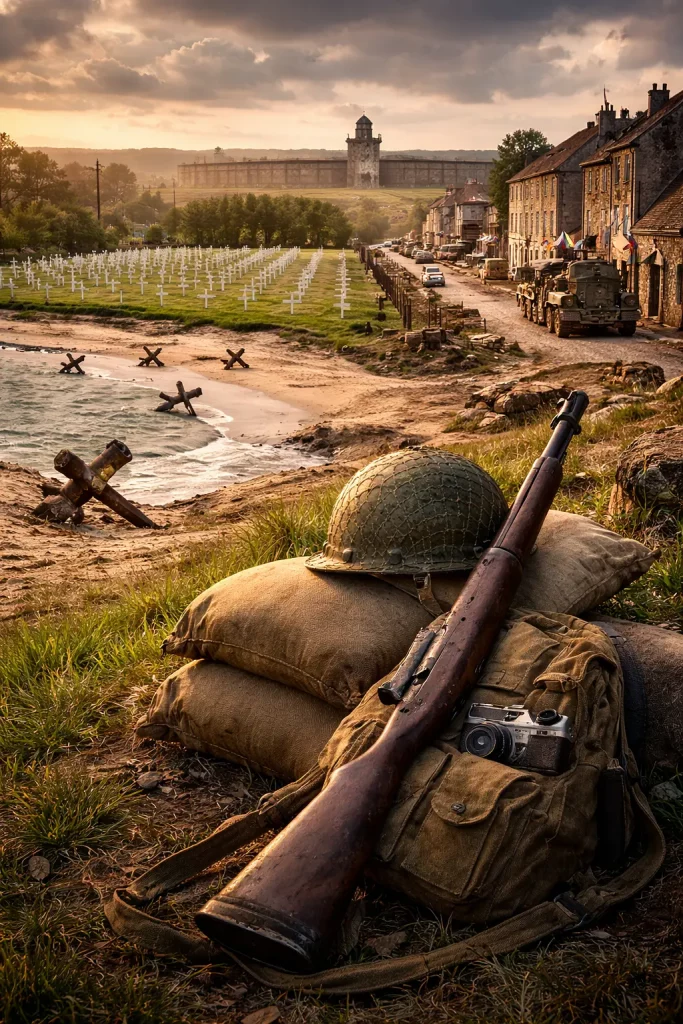
We met our guide near Bayeux at 8 a.m. It was cool and windy. He had a folder of old photos and a sand map he drew with his finger. My group had seven people. A retired nurse, a father and son, a quiet couple, and me. I brought a ham-and-butter sandwich from a bakery. I ate it fast in the van.
Stops we made:
- Pointe du Hoc: those cliffs look like broken teeth. Wind stung my face. We had only 30 minutes because buses kept coming.
- Omaha Beach: I took off my shoes. The sand was cold and clean. A man beside me pressed his palms to the ground and said nothing.
- Colleville American Cemetery: the grass looked like someone combed it. We stood for the flag lowering. I cried a little, and I’m okay telling you that.
- Sainte-Mère-Église: the church with the parachute on the roof. It looks odd and brave at the same time.
What I loved:
- Small group. Lots of time for questions.
- The guide used aerial photos. He showed us hedgerows and how they slowed tanks.
- We got tiny stories. A baker who hid men. A child who watched from a hedge.
What I didn’t love:
- Pointe du Hoc felt rushed. It was busy.
- Weather swings are real. My ears were warm, my feet were wet. Bring socks.
Would I book again? Yes. OverlordTour felt careful and proud, not salesy.
Berlin On Foot Feels Honest (Insider Tour Berlin)
This was a three to four-hour walking tour. It started near the Brandenburg Gate. We stopped at the Memorial to the Murdered Jews of Europe. We walked to the Topography of Terror and the site of Hitler’s bunker (it’s a parking lot now). The guide drew a line with his arm and said, “This was the border. Here. Right here.” That stuck.
We took a coffee break at a small café near Potsdamer Platz. I had a flat white and a pretzel, which sounds silly on a war tour, but my feet were grateful.
Good:
- Clear route. Short walks between big stops.
- The guide explained names and dates in plain words. He also said, “If you forget a date, remember a face,” and I kind of loved that.
Less good:
- The group was about 20 people. It was fine, but I do prefer smaller.
- If you want deep, deep detail, book a private guide. This tour is a strong base layer.
Auschwitz-Birkenau: Quiet Hours From Kraków
This one is hard. It should be. We left Kraków early. The bus was clean and quiet. At Auschwitz I, we used headsets. Our guide never raised her voice. She didn’t need to.
I walked slow. I kept my hands still. Birkenau is wide and open. You can hear wind move across the tracks. I didn’t take many photos. It felt wrong for me, personally.
What to know:
- It can feel rushed. There’s a lot to see, but the path is set.
- Bring water. Wear soft shoes. Leave snacks for after.
- Be gentle with your day. I didn’t plan anything fun right after. I just walked by the Vistula River and looked at the water.
I’m glad I went. I’m also glad I left space for the feelings after.
Bastogne: Foxholes, Stories, And A Star-Shaped Memory
I took a morning bus to Bastogne. The Bastogne War Museum uses an audio guide that follows a few people’s lives. You sit in rooms where scenes play out with sound and light. It’s not cheesy; it’s careful.
Then I hired a local driver for two hours. We went to Bois Jacques, where the “Easy Company” foxholes are. You can see them. You can stand at the edge and look into the trees. It was quiet. Just birds and the sound of your own breath.
We also stopped at the Mardasson Memorial. It’s a big star. Walk up. Look out over fields. It’s simple and strong.
Good:
- The museum flows well. The stories feel human.
- The foxholes are the part I still think about.
Less good:
- Without a car, reaching spots around town can be clumsy. A driver helps.
Also, the hot chocolate in town? Thick and perfect. Little joy, big day.
Arnhem: Bridges, Bikes, And A Very Good Apple Pie
Arnhem surprised me. I booked a small, family-run tour. My guide had a binder of maps, plastic protectors and all. We stood by the John Frost Bridge. We talked about “a bridge too far,” about plans that looked neat on paper and fell apart in rain and fog.
We went to the Airborne Museum at Hartenstein in Oosterbeek. It has a basement with a battle scene you walk through. It’s a bit loud, but it explains a lot.
At a café, I had apple pie with a mountain of whipped cream. War talk and pie. It felt odd, but it felt real. Life keeps moving, even in the heavy places.
Eagle’s Nest And The Mountain Air
From Munich, I booked a day trip to Berchtesgaden. The bus climbs, then you go through a long tunnel and take the brass elevator up. The view at the Eagle’s Nest is wild—blue and green in every direction. The Documentation Center down the hill is the real classroom, though. It tells the story of the regime, the town, and the people who lived under it.
Heads-up:
- Weather can cancel the lift. Clouds roll in fast.
- Very busy in summer. Early starts help.
I liked the split: big view up top, heavy history below. Both matter.
Little Things I Wish I Knew
- Wear layers. Europe changes moods fast.
- Small groups help you learn more. Vans beat big buses for me.
- Eat local and simple. A galette in Bayeux, bratwurst in Berlin, pierogi in Kraków. Food helps you breathe between stops.
- Bring a pen. I marked names and places in my guidebook as I went.
- If you go near June 6 in Normandy, book months ahead.
- Respect the spaces. Speak soft. Listen more than you talk.
If you need a wallet-friendly place to sleep between these history-heavy days, the European Guesthouse puts you close to train lines without draining the tour fund.
So, Who Should Book These?
Teachers. History buffs. Kids who read a lot and ask big questions. Families who want more than dates. If you can walk a few miles and handle heavy stories, you’ll be okay. If you need timeouts, take them. I did. I just sat on a bench sometimes and looked at trees.
My Quick Picks If You’ve Got Limited Time
- One day: Normandy with OverlordTour.
- Two days: Add Berlin’s walking tour.
- Three to four days: Add Auschwitz from Kraków or Bastogne with a foxhole visit. Pick the one your heart pulls toward.
I went for my grandpa. I stayed for me. These tours didn’t fix anything. They didn’t try. They showed me people—brave, scared, flawed, kind. That was enough.
If you go, bring a warm hat, a good guide, and an open mind. The rest, somehow, shows up when you need it.
—Kayla Sox